ACS Nano editor leads June 30 INBT seminar

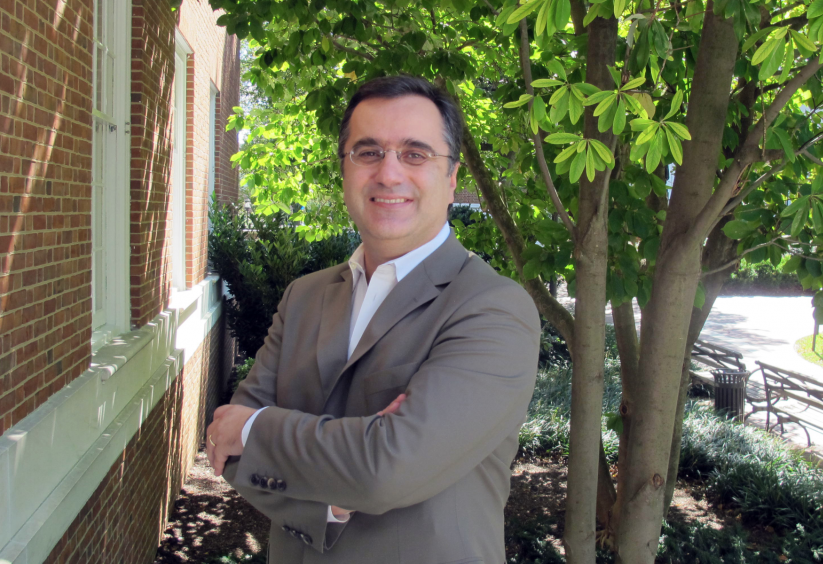
Penelope Lewis, acquisitions editor for the journal ACS Nano will lead the next professional development seminar for Johns Hopkins Institute for NanoBioTechnology (INBT) on June 30 at 11 a.m. in Maryland 110. These seminars aim to expand students’ knowledge of issues and ideas relevant to but outside of the laboratory and classroom experience.

Penelope Lewis

Lewis, acquisitions editor of the American Chemical Society’s journal, ACS Nano. Lewis, earned a Ph.D. in chemistry from Penn State University. She will talk about her experience as a scientist moving into the world of academic publishing.

“A career in scholarly publishing can be an interesting and rewarding path for graduate students or post-docs who are looking to move away from the lab bench but still be surrounded by scientific research. In scientific publishing, a doctoral degree or a postdoc is always a great strength and for many positions a requirement. In this talk, I will describe the daily activities involved in working at a non-profit publisher, including the skills and interests that are helpful to succeed in this position,” Lewis said.

All JHU/JHMI and APL faculty, staff and students are invited to attend these free seminars, designed to promote discussion and interaction with scientific and engineering professionals. To find out the location and to RSVP for each seminar, please contact Ashanti Edwards at ashanti@jhu.edu.

Lights! Camera! Science!


INBT Web Director Martin Rietveld works on protocol video with PhD student Yu-Ja Huang. (Photo:MSpiro)

Everything about movie making seems so glamorous. From beautiful stars to special effects, making films might appear magical. But actually, when you break it down, shooting a film is not unlike performing experiments in a lab. And, just as reading the script would be far less entertaining as seeing a film, reading a protocol might be confusing until the steps were performed in real life.

That’s the philosophy behind a new effort at Johns Hopkins Institute for NanoBioTechnology: produce short films describing recently published research and the protocols that go with them. The movies are produced collaboratively with INBT’s science writer Mary Spiro, INBT’s Animation Studio director Martin Rietveld, and the scientists and engineers involved.

The INBT Animation Studio already has several research-oriented films to its credit. The animation skills of Rietveld and his student crew have taken us inside a lipid bilayer and carried us along a fiber of collagen. INBT also has produced several video news releases using the talent of students in the annual science communication course.

Recently, however, INBT produced its first film describing a protocol from Nature Methods. Investigators Bridget Wildt, a PhD in materials science and engineering, Peter Searson, Reynolds Professor of Materials Science and Engineering, and Denis Wirtz, Smoot Professor of Chemical and Biomolecular Engineering, served as technical consultants for the production. The research was part of Johns Hopkins Engineering in Oncology Center, of which Wirtz is the director.

Materials science and engineering PhD candidate Yu-Ja Huang performs each step in assembling the Hopkins team’s device and demonstrates how to conduct programmed cell detachment experiments. “Studying cell detachment at the subcellular level is critical to understanding the way cancer cells metastasize,” Searson said. “Development of scientific methods to study cell detachment may guide us to prevent, limit or slow down the deadly spreading of cancer cells.”

Using a draft script developed by Wildt and Searson, Spiro simplified the text further for narrator, materials science and engineering PhD candidate Andrew Wong. Rietveld recorded Huang as he performed the protocol and refined the script further during filming. Viewing the final cut, Wong was able to read the script in a conversational and friendly tone.

You can watch the version of this new protocol video on INBT’s YouTube channel. The film may never earn an Academy Award, but we hope it will help specialists, and even the general public, to understand this unusual and complex procedure.

Related Links:

Check our INBT’s channel on YouTube.

Engineering in Oncology Center

Story by Mary Spiro

Professional development seminars kick off with talks on tech transfer, publishing

Aris Melissaratos

UPDATED TIMES AND LOCATIONS

Johns Hopkins Institute for NanoBioTechnology (INBT) will host four free professional development seminars for scientists and engineers this summer. These seminars aim to expand students’ knowledge of issues and ideas relevant to but outside of the laboratory and classroom experience.

Topics include intellectual property, commercialization and entrepreneurship, science journalism and publishing, ‘life after college” and much more. This summer, talks will be held Wednesdays at 11 a.m. on June 16, June 30, July 14 and July 28. Talks on June 16 and June 30 will be held in Maryland 110; talks on July 14 and July 28 will move to Ames 234.

Talks scheduled so far include:

June 16: Aris Melissaratos, senior advisor to the president from Johns Hopkins University Technology Transfer, will discuss what it takes for an research idea to move from bench to the commercial market. Johns Hopkins Technology Transfer is the office that links university researchers and businesses interested in commercializing their inventions.

June 30:  Penelope Lewis, acquisitions editor of the American Chemical Society’s journal, ACS Nano. Lewis, who earned a PhD in Chemistry from Penn State University, will talk about her experience as a scientist moving into the world of academic publishing.

Penelope Lewis

“A career in scholarly publishing can be an interesting and rewarding path for graduate students or postdocs who are looking to move away from the lab bench but still be surrounded by scientific research. In scientific publishing, a doctoral degree or a postdoc is always a great strength and for many positions a requirement. In this talk, I will describe the daily activities involved in working at a non-profit publisher, including the skills and interests that are helpful to succeed in this position,” Lewis said.

All JHU/JHMI and APL faculty, staff and students are invited to attend these free seminars designed to promote discussion and interaction with scientific and engineering professionals. To find out the location and to RSVP for each seminar, please contact Ashanti Edwards at ashanti@jhu.edu.

First annual NCI physical sciences-oncology center investigators’ meeting held

Bryan Smith (Stanford) and Christopher Hale (JHU) shared a PS-OC Young Investigators’ Trans Network Award. (Photo/Mary Spiro)

The First Annual Physical Sciences-Oncology Centers Network Investigators’ Meeting was held April 5-7, at the National Harbor in Washington, D.C. Johns Hopkins Engineering in Oncology Center director Denis Wirtz, professor of chemical and biomolecular engineering,  presented a tutorial on particle tracking, presented a talk on mechanobiology, and chaired a panel discussion on cancer cell mechanics.

In addition, several researchers affiliated with the EOC were awarded Young Investigators Trans-Network Project Awards. Wirtz’s doctoral student Christopher Hale, working with Bryan Smith of Stanford University, was recognized for the poster presentation “Tracking the Mechanics of Cancer in Living Subjects Using Intracellular Nanorheology.” Wirtz’s postdoctoral fellow Daniele Gilkes, working with colleagues at Cornell University, earned accolades for the poster presentation “Synergistic Effects of Hypoxia and Substrate Stiffness on Cancer Cell Force Generation.”

A total of 13 research posters from Johns Hopkins PS-OC were presented at the three-day meeting.

INBT students to teach about self assembly during national science expo

USA Science and Engineering Festival, Oct 23-24

Predoctoral students, faculty and staff affiliated with INBT, including students in INBT’s National Science Foundation funded IGERT program, will help demonstrate the principles of self-assembly to children and adults alike. Participants at the INBT booth will be able to see at the macro scale what happens when materials of various shapes and sizes assemble into more complex structures at the nanoscale. Through a variety of hands-on experiments and by watching a variety of movies and animations about self assembly produced by the INBT Animation Studio, the students hope to be able to share their expertise in science and engineering with the general public.

During the two-day expo, USA Science and Engineering Festival organizers anticipate at least 750 exhibits from more than 350 of the nation’s leading science and engineering organizations including colleges and universities, corporations, federal agencies, museums and science centers, and professional engineering and science societies. Topics represented range from aerospace, green energy, medicine, biotechnology, climatology to robotics, nanotechnology, botany, neuroscience, genetics, and more.

The USA Science & Engineering Festival is the result of the highly successful inaugural San Diego Science FestivalSM held in April 2009 and both are the brainchild of life science and high technology entrepreneur Larry Bock. The festival is hosted by Lockheed Martin and sponsors include Life Technologies Foundation, Clean Technology and Sustainability Industries Organization (CTSI), Larry and Diane Bock, ResMed Foundation, Farrell Family Foundation, Alexandria Real Estate Equities, Northrop Grumman Corporation, Agilent Technologies, Amgen, Celgene Corporation, The Dow Chemical Company, National Institutes of Health, Illumina, You Can Do the Rubik’s Cube, Vertex Pharmaceuticals Inc., Genentech Inc., MedImmune, Sandia National Laboratories, Project Lead The Way (PLTW), K&L Gates, NuVasive Inc., FEI Company, Case Western Reserve University, Silicon Valley Bank, Bechtel Corporation, SpaceX and the National Radio Astronomy Observatory. Media partners include Popular Science and Science Illustrated, New Scientist, EE Times Group, SCIENTIFIC AMERICAN, POPULAR MECHANICS, Forbes Wolfe Emerging Tech Report, FAMILY Magazine and SciVee, Inc.

Additional Information:

Preview of the types of exhibits planned for the National Expo and view a short video of what happened in San Diego here.

For a complete list of sponsors, partners and exhibitors, click here.

Hopkins biomedical engineering doctoral student wins Weintraub Award

Deok-Ho Kim

Deok-Ho Kim, currently a postdoctoral fellow in the department of Biomedical Engineering, was among 13 graduate students from North America chosen to receive the 2010 Harold M. Weintraub Graduate Student Award, sponsored by the Basic Sciences Division of Fred Hutchinson Cancer Research Center in Seattle, Wash. Nominations were solicited internationally and winners were selected on the basis of the quality, originality and significance of their work.

The award, established in 2000, honors the late Harold M. Weintraub, Ph.D., a founding member of the FHC’s Basic Sciences Division, who in 1995 died from brain cancer at age 49. According to a press release from FHC, “Weintraub was an international leader in the field of molecular biology; among his many contributions, he identified genes responsible for instructing cells to differentiate, or develop, into specific tissues such as muscle and bone.”

Kim will receive a certificate, travel expenses and an honorarium from the Weintraub and Groudine Fund, established to foster intellectual exchange through the promotion of programs for graduate students, fellows and visiting scholars. Kim works in the laboratory of Andre Levchenko, associate professor of biomedical engineering at Johns Hopkins University’s Whiting School of Engineering and an affiliated faculty member of the Institute for NanoBioTechnology.

Read more about Kim’s research with Levchenko here.

Drazer wins NSF Career Award

German Drazer

German Drazer (Photo: Will Kirk)

German Drazer, assistant professor in the Department of Chemical and Biomolecular Engineering and affiliated faculty member of Johns Hopkins Institute for NanoBioTechnology was recently named a recipient of the National Science Foundation Faculty Early Career Development (CAREER) awards, given in recognition of a young scientist’s commitment to research and education. Drazer was given the award for “Deterministic and Stochastic Transport of Suspended Particles in Periodic Systems: Fundamentals and Applications in Separation Science.” The grant will support his investigations into the transport phenomena that arise in the motion of suspended particles in spatially periodic systems, and the translation of these phenomena into new principles for the manipulation of suspended particles in fluidic devices.

Read more about the work in the Drazer Lab here.

INBT researchers use LEGO to study what happens inside lab-on-a-chip devices

Princeton physicist to discuss physics of cancer cell resistance

Physics professor Robert Austin, right, and graduate ¬student Guillaume Lambert observe prostate cancer cells growing on chips of silicon and silicon-based plastic. (Princeton Office of Communications)

The fact that cancer cells frequently re-emerge after initial therapeutic attempts has dogged the efforts of oncologists to save patients’ lives for decades. According to Princeton physicist, Robert H. Austin, cancer cell resistance is primarily a biological reaction to stress and “one of the great unsolved, and deadly, problems in oncology.”

On Thursday, February 4, Austin will discuss, “The Physics of Cancer,” during a 3 p.m. joint colloquium hosted by Johns Hopkins University departments of Physics and Astronomy and Biophysics in the Schafler auditorium of the Bloomberg Center on the Homewood campus. The talk is free and open to the public.

Austin is principal investigator for Princeton’s Physical Science-Oncology Center and a trans-network partner with Johns Hopkins Engineering in Oncology Center, both of which are National Cancer Institute funded organizations.

Austin will address the general principles of physics, ecology, and biology and why recurrence of resistant cancer cells seems to be a universal phenomenon in cancer. He says that “evolution in small, stressed habitats is key to the rapid and inevitable re-emergence of resistance of cancer cells” (and) “that modern techniques of physical probes, genomics, proteomics and nanotechnology will allow us to analyze the evolutionary path of these emergent resistant cells.”

Related Links

Johns Hopkins Engineering in Oncology Center

Flyer for  Prof. Austin’s colloquium

Physical Sciences in Oncology Centers of the National Cancer Institute

Environmental, health impacts of engineered nanomaterials theme of INBT’s annual symposium

By 2015, the National Science Foundation reports that the nanotechnology industry could be worth as much as $1 trillion. Nanomaterials have many beneficial applications for industry, medicine and basic scientific research. However, because nanomaterials are just a few atoms in size, they also may pose potential risks for human health and the environment.

Cross-sectional autoradiograms of rodent brains showing (A) control physiological state; and (B) and (C) showing distribution of brain injury from an injected neurotoxicant. Red areas indicate the highest concentrations of a biomarker that identifies brain areas that are damaged by the neurotoxicant. (Guilarte Lab/JHU)

Cross-sectional autoradiograms of rodent brains showing (A) control physiological state; and (B) and (C) showing distribution of brain injury from an injected neurotoxicant. Red areas indicate the highest concentrations of a biomarker that identifies brain areas that are damaged by the neurotoxicant. (Guilarte Lab/JHU)

To increase awareness of Hopkins’ research in this emerging area of investigation, the theme for the fourth annual symposium hosted by Johns Hopkins Institute for NanoBioTechnology (INBT) will be environmental and health impacts of engineered nanomaterials. INBT’s symposium will be held Thursday, April 29, from 8 a.m. to 3 p.m. at the university’s Bloomberg School of Public Health in Baltimore, Md.

Morning talks in Sheldon Hall by eight Hopkins faculty experts will discuss neurotoxicity, exposure assessment, manufacture and characterization of nanomaterials, policy implications and many other topics. In the afternoon, a poster session will be held in Feinstone Hall featuring nanobiotechnology research from across the university’s divisions.

INBT is seeking corporate sponsorships for the symposium. Interested parties should contact Thomas Fekete, INBT’s director of corporate partnerships at tmfeke@jhu.edu or 410-516-8891.

Media inquiries should be directed to Mary Spiro, INBT’s science writer and media relations director, at mspiro@jhu.edu or 410-516-4802.

A call for posters announcement will be made at a later date.

More:

INBT, EOC directors named AAAS 2009 Fellows

The Johns Hopkins Whiting School of Engineering faculty members who direct the Institute for NanoBioTechnology and Engineering in Oncology Center both have been awarded the distinction of AAAS Fellow. Election as a Fellow is an honor bestowed upon AAAS members by their peers.

Peter Searson, INBT director. Photo by Will Kirk/JHU

Peter Searson, INBT director. Photo by Will Kirk/JHU

Denis Wirtz, EOC director. Photo by Will Kirk/JHU

Denis Wirtz, EOC director. Photo by Will Kirk/JHU

Peter C. Searson, the Joseph R. and Lynn C. Reynolds Professor of Materials Science and Engineering, was named for distinguished contributions to the field of surface chemistry and nanoscience. His research interests include surface and molecular engineering, and semiconductor quantum dots.

Searson directs the interdivisional Institute for NanoBioTechnology launched in May 2006, which brings together researchers from medicine, engineering, the sciences, and public health to create new knowledge and develop new technologies to revolutionize health care and medicine. INBT currently has more than 190 affiliated faculty members. Searson has secondary appointments in the Krieger School of Arts and Sciences Department of Physics and Astronomy and the Johns Hopkins School of Medicine Department of Oncology.

Denis Wirtz, the Theophilus H. Smoot Professor of Chemical and Biomolecular Engineering, was elected for his contributions to cell micromechanics and cell adhesion. He also was distinguished for his development and application for particle tracking methods to probe the micromechanical properties of living cells in normal conditions and disease state. Wirtz studies the biophysical properties of healthy and diseased cells, including interactions between adjacent cells and the role of cellular architecture on nuclear shape and gene expression.

Wirtz directs the newly formed Johns Hopkins Engineering in Oncology Center. The EOC is a Physical Sciences in Oncology program center of the National Cancer Institute launched in October 2009 with a $14.8 million grant from the National Institutes of Health. EOC brings together experts in cancer biology, molecular and cellular biophysics, applied mathematics, materials science, and physics to study and model cellular mobility and the assorted biophysical forces involved in the spread of cancer. Wirtz also serves as co-director of the Institute for NanoBioTechnology and has a joint appointment in the Johns Hopkins School of Medicine Department of Oncology.

A total of seven Johns Hopkins faculty members were elected to AAAS this year. Read about all of them in a Johns Hopkins University press release listed in the links below.

This year 531 members have been awarded this honor by AAAS because of their scientifically or socially distinguished efforts to advance science or its applications. New Fellows will be presented with an official certificate and a gold and blue (representing science and engineering, respectively) rosette pin on Feb. 20 at the AAAS Fellows Forum during the 2010 AAAS Annual Meeting in San Diego.  AAAS Fellows were announced in the AAAS News & Notes section of the journal Science on Dec. 18,  2009.

Story by Mary Spiro with materials provided by AAAS.

Seven Johns Hopkins Researchers Named 2009 AAAS Fellows

Searson Group Lab page

Wirtz Group Lab page

Johns Hopkins Institute for NanoBioTechnology

Whiting School of Engineering