
Uncovering How Cells Regulate Mass Density
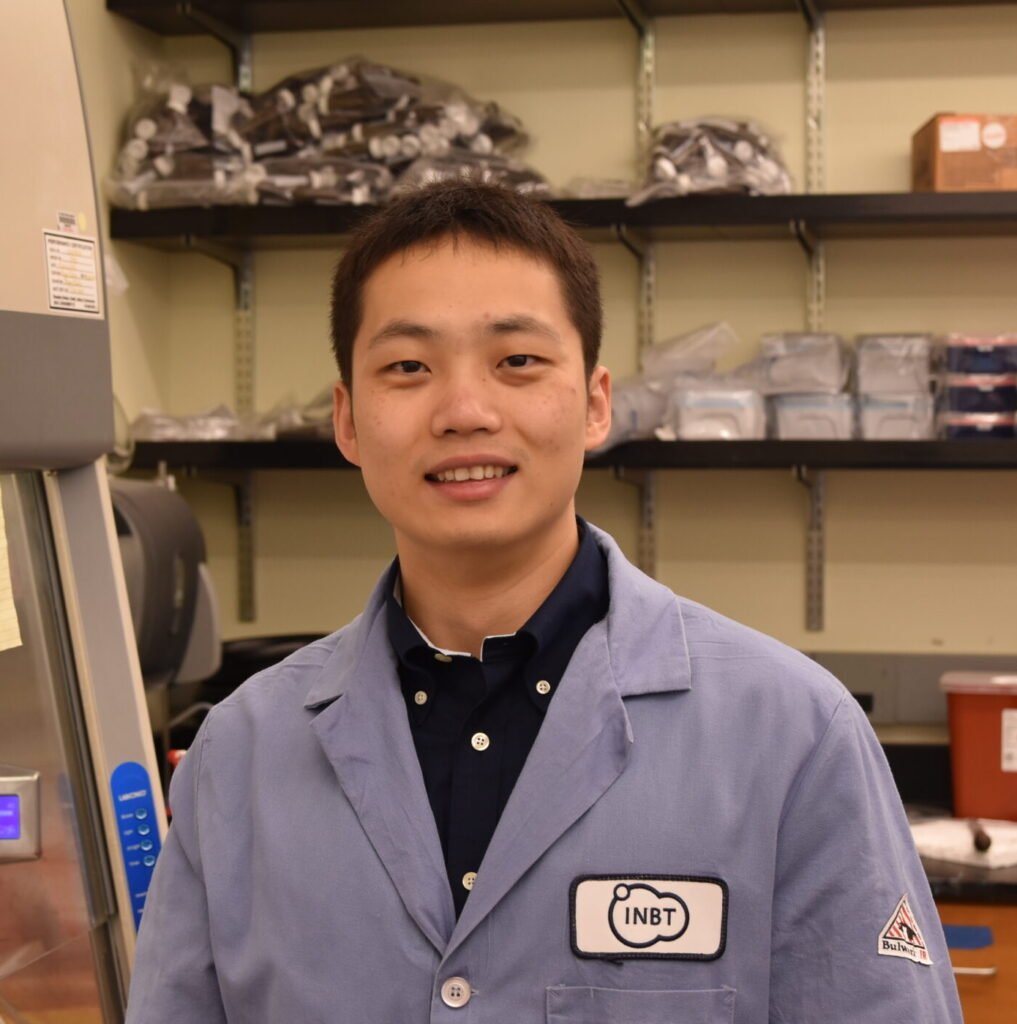
Growing up, Gene Fu was always curious about the natural world — from animals and plants to the mechanics of how things work. When he began his undergraduate studies at the Rochester Institute of Technology (RIT) in New York, Fu knew he had an aptitude for physics and math, but until then, he had studied them passively and without much passion. That changed after he took physics and math courses at RIT, where he was inspired by a group of dedicated professors.
“They were very knowledgeable, kind, and supportive,” Fu recalled. “I was eager to attend classes and continue exploring outside of the classroom.”
With his professors’ mentorship, Fu became deeply engaged in his studies and began conducting research that ranged from biophysics to quantum mechanics. These early experiences ultimately led him to pursue a PhD at Johns Hopkins University after graduating from RIT.
For his doctoral research, Fu worked under Sean Sun, a core researcher at the Institute for NanoBioTechnology and professor in the Department of Mechanical Engineering at the Whiting School of Engineering. Together, they explored cell-level biophysics, a field that combines physics with biology and bridges experimental work with theoretical models.
Fu’s most recent publication, in Science Advances, focuses on cell mass density (CMD). His team discovered that cells possess a built-in control system that actively regulates CMD, even when their external environment changes dramatically — a finding that opens new doors for understanding cellular health and disease.
By August 2025, Fu had earned both a master’s degree and a PhD in Physics and Astronomy from Johns Hopkins University.
What did you research?
Cell mass density, or a cell’s weight-to-volume ratio, is critical for maintaining cellular balance and health, as it directly influences the transport and reaction rates of molecules inside the cell. Understanding CMD and the mechanisms cells use to regulate it helps researchers uncover survival strategies and also provides insights into how cells respond to stress, with potential applications for improving treatments for cancer and immune disorders.
Our team developed specialized techniques to study how cells alter their density. We investigated how quickly cells return to their normal density under stress and examined this process across multiple cell types. We found that cells control ion channel activities to regulate volume growth and protein synthesis to regulate mass growth. By coordinating these two processes, cells maintain their density. When density rises too high, cells increase volume growth while decreasing mass growth — and vice versa. Interestingly, cells prioritize regulating their density over their absolute volume or mass.
What were the challenges to studying cell mass density?
The main challenge was developing techniques precise enough to measure CMD with the accuracy required, and identifying a research angle that was both promising and impactful.
How did you overcome these challenges?
Our team spent nearly two years refining the experiments and analysis methods, drawing on extensive reading of research papers and consultations with experts. We tested cell density changes under a variety of physiological conditions before narrowing our focus to hypertonic stress — when the surrounding environment has an excessively high solute (such as salts or sugars) concentration. This imbalance causes intracellular water to flow out, rapidly shrinking the cell’s volume. Because prolonged or severe hypertonic stress can significantly alter CMD and even permanently damage or kill cells, it provided a powerful model for understanding how cells regulate their density under extreme conditions.
What are the impacts of this research?
Our work demonstrated that cell mass density regulation plays a critical role in how cells maintain health and adapt to environmental changes. These discoveries provide foundational insights that could lead to new strategies in diagnostics, drug development, and improved immunotherapies. For example, we observed that cancer cells tend to have a lower density than normal, healthy cells. This suggests that manipulating cell density may offer a promising strategy to selectively eliminate cancer cells while sparing healthy ones.
When you were not doing research, what did you do in your spare time?
I have always had a passion for outdoor activities, sports, animals, plants, art, and history. In Baltimore, I also enjoyed exploring local restaurants in my spare time.
What are your career plans now that you have graduated?
I am currently applying for scientist and engineering positions in the fields of life sciences, clean energy, and robotics.
Latest Posts
-
 Year in Review 2025
January 5, 2026
Year in Review 2025
January 5, 2026
-
 Cellular building blocks may enable new understanding of the body’s “machinery”
December 19, 2025
Cellular building blocks may enable new understanding of the body’s “machinery”
December 19, 2025
-
 Biomedical Engineer Jamie Spangler Receives President’s Frontier Award
December 15, 2025
Biomedical Engineer Jamie Spangler Receives President’s Frontier Award
December 15, 2025