
Cellular building blocks may enable new understanding of the body’s “machinery”
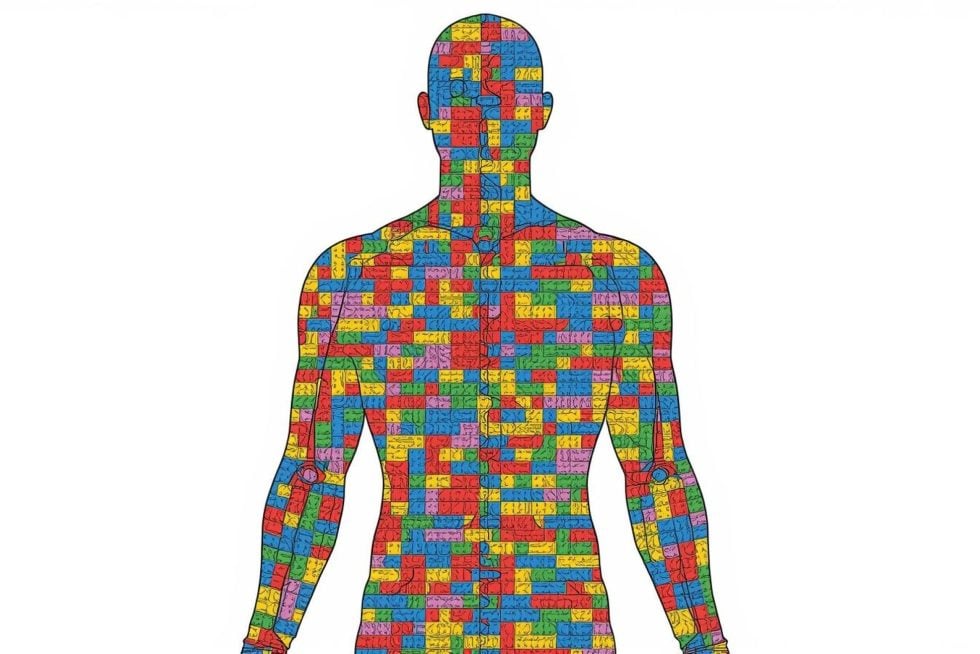
Above image: The team conceptualized masses of cells as small building blocks that perform specific functions within the body.
Yun Chen tackles emerging field of “single-cell science”
In the field of biomedical engineering and therapeutics, researchers focus on two main models of inquiry: studying the behavior of individual cells and understanding how tissues and organs work. A multidisciplinary team from several leading institutions, including Johns Hopkins University, is collaborating to connect these two models using a new approach called “single-cell science.” Their goal is to understand individual cells as well as how these cells function collectively to form complex organs and tissues.
The team, including Yun Chen, an associate professor of mechanical engineering and researcher in JHU’s Institute for NanoBiotechnology (INBT), outlined their approach in a paper recently published in Cell. The team conceptualized small building blocks of cells, called mesoscale modules, and how groups of these cells facilitate organs to perform specific functions. These functions include regulating the traffic of small molecules in and out of an organ, systematically hunting down intruding microbes in the body, and regulating the renewal of young cells to replace the aging ones.
“The real magic happens in how cells interact with each other and surrounding biomaterials to become functional teams,” Chen says. “By focusing on the job performed by a specific team we can better understand the causes of diseases like cancer, rather than just identifying individual gene mutations. Many of our biggest health problems aren’t just problems with genes going rogue in cells—they are problems with how these modules dysfunction. Drugs addressing dysfunctional modules to treat diseases do not exist because until now the focus has been on gene mutations.”
The team identified numerous functional units, which they call “modules.” To understand why these modules matter for health and disease, consider metastatic cancer: cancer cells can exploit “street-like” modules in tissue—similar to motorists choosing straight highways over winding country roads—to spread aggressively to other organs. By integrating insights from a decade of single-cell studies and uncovering these multi-cellular functional units, the researchers believe clinicians will gain a deeper understanding of how to maintain health and treat disease.
“By focusing on these modules, scientists can better interpret complex datasets and uncover functional relationships that are obscured when analyzing data at only micro or macroscales. Doing this requires first building algorithms that will enable us to identify the mesoscale modules,” Chen says. “The next step is to construct a roadmap for identifying mesoscale modules by building advanced algorithms capable of mining existing and future datasets. Our perspective lays the foundation for this roadmap and invites the community to contribute to its development.”
Chen explains that developing this roadmap could transform how data are used in biomedical research and precision medicine.
“Integrating this large-scale quantification of cells within the body with tissue functions through mesoscale modules could lead to more accurate disease models, improved biomarker discovery, and better strategies for therapeutic interventions,” she says.
Story by Jonathan Deutschman in the Department of Mechanical Engineering.
Latest Posts
-
 Year in Review 2025
January 5, 2026
Year in Review 2025
January 5, 2026
-
 Cellular building blocks may enable new understanding of the body’s “machinery”
December 19, 2025
Cellular building blocks may enable new understanding of the body’s “machinery”
December 19, 2025
-
 Biomedical Engineer Jamie Spangler Receives President’s Frontier Award
December 15, 2025
Biomedical Engineer Jamie Spangler Receives President’s Frontier Award
December 15, 2025