Program
How many students are accepted to the program?
We accept up to 15 students each summer to participate in the program.
Can I choose a research project and faculty member that directly aligns with my research interests?
Once accepted into the program, the INBT team pairs you with appropriate mentors and a research project. Pairing is based on many factors including participating faculty*, available research projects, and your research experience, education, interests, and goals. However, faculty and project availability changes yearly. As such, we cannot guarantee that you will work on a project and with faculty that perfectly match your interests.
Valuable scientific discoveries—and meaningful personal growth—often come from exploring unfamiliar research areas. We encourage applicants to describe their interests in their personal statements and welcome those who are curious, adaptable, and open-minded. If you prefer to work exclusively within a narrowly defined area, we recommend considering programs with a more specialized focus.
*The Institute for NanoBioTechnology works with many Johns Hopkins faculty and those who host REU students in their laboratory rotate from year-to-year. Faculty that have hosted students in the past include: Claire Hur, Denis Wirtz, Efie Kokkoli, Hai-Quan Mao, Honggang Cui, Jeff Wang, Jochen Mueller, Jordan Green, Jude Phillip, Kalina Hristova, Konstantinos Konstantopoulos, Luo Gu, Peter Searson, Robert Ivkov, Rebecca Schulman, Sangmoo Jeong, Sean Sun, Warren Grayson, Xiaobo Mao, Yun Chen, and more.
Where are students housed while in the program?
Housing accommodations can change from year-to-year based on program funding. Typically, accommodations are shared dorm or apartment-style housing with access to kitchen facilities so students can cook their own meals. Rooms are furnished and include essentials such as pillows, linens, and cooking and eating utensils.
Housing location is also subject to change, but students will stay in Baltimore City and all efforts are made to secure housing within walking distance of the Johns Hopkins Homewood campus. Students placed with faculty mentors at the Johns Hopkins Medical campus have access to university bus and shuttle services to travel to the campus as well as other campuses.
How do students travel between the Johns Hopkins campuses and around Baltimore City?
All students have access to university bus and shuttle services to travel between campuses. University shuttle services also run night and evening services to neighborhoods between the Homewood campus and Baltimore’s Inner Harbor, as well as to grocery stores. Baltimore city and the Maryland Transportation Authority also offer a variety of transportation services to get around Baltimore and the surrounding areas, which include the Charm City Circulator, Penn Station, Marc Train, scooter and bike rentals, and more.
How is the stipend paid?
The stipend is paid to students bi-weekly over the course of the program via check or direct deposit. In addition to the stipend, the program covers most travel expenses to and from the Johns Hopkins University Homewood campus at the beginning and end of the program.
What activities do students participate in?
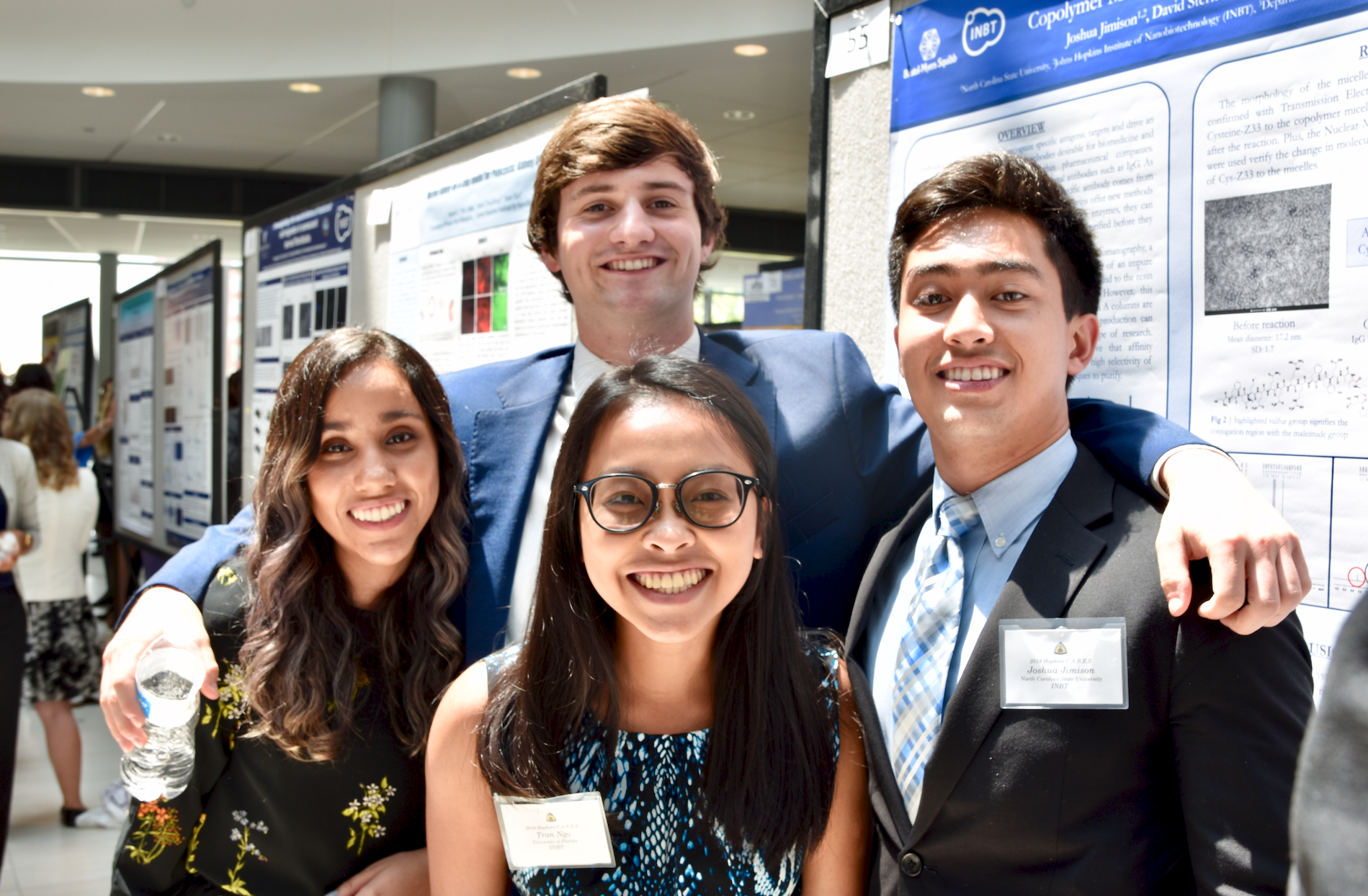
Participants spend most of their time with mentors on their research project and building technical skills. They also attend required events and activities, such as weekly journal club meetings and workshops on topics that range from applying to graduate school and graduate life, how research is brought to the market, and communicating scientific research to the public. At the end of the program, students give an oral presentation of their summer research project to the INBT community. There is also an opportunity for students to present a research poster at the CARES Symposium on the Johns Hopkins Medical campus with students in other summer programs.
Field trips to research facilities are also built into the schedule. Past field trips included the Johns Hopkins Applied Physics Laboratory and the NASA Goddard Space Flight Center.
Typically, students have evenings and weekends to themselves to explore Baltimore and the surrounding areas on their own, with other program participants, and their laboratory peers. Baltimore has a rich history, vibrant culture, and great food with many events happening in the summer. Students can watch a free concert or movie in the Inner Harbor, catch an Orioles game at Camden Yards, explore historic monuments and museums like Fort McHenry, and try must-have Maryland food. This article on Must-Do Baltimore Experiences for First-Time Visitors is a great place for participants to start.
Past participants have used their time in the program to network with Johns Hopkins researchers, participate in Hopkins student organizations, meet with graduate recruiters, shadow physicians at the Johns Hopkins School of Medicine, and more!
Eligibility
What is the minimum GPA required to apply to the program?
Can I participate in the program if I am a freshman, senior, or masters student?
Candidates must be currently enrolled in an undergraduate program and plan to return to an undergraduate program after their participation in the program. This means that you must have completed your freshman year of college by the time the program starts. Furthermore, if you are a senior and graduate before this program begins, you are NOT eligible to apply.
What if I am accepted to the program, but I can't join until after the start date.
The program has a busy schedule and a lot of time is dedicated to the student’s research project. If a student started late, they may not complete their research project. Therefore we cannot accept late participants. The same rule applies to those who would like to leave the program early. If you are invited to participate in the program you must commit to the full 10 weeks.
Can I be accepted into the program if I am NOT a U.S. citizen, legal permanent resident, or non-citizen national?
Our sponsor, the National Science Foundation, requires that all REU participants be a U.S. citizen or a permanent resident of the United States, its territories, or possessions. There are no exceptions.
Application
Where do students submit their application documents?
Applicants must submit their documents on the National Science Foundation ETAP application platform.
Applications submitted through Handshake or any other platform will not be considered.
How long should the personal statement be?
Your personal statement should be double-spaced and between 300 to 500 words.
What information should students include in their personal statement?
We do not have guidelines on what should be included in your personal statement. Applicants should consider the information they want to highlight that demonstrates their talents, skills, passions, accomplishments, education, experiences, and more that make them a competitive candidate for the program.
How do references submit their letters?
Once you submit the reference’s information in the ETAP platform, an email is sent to them with instructions on how to submit their letter. Contact Luke Thorstenson only if your reference is having trouble submitting their letter.
We recommend requesting letters of recommendations from your references early so they have ample time to write and submit their letters. We do not accept late letters and applicants will not be considered without them.
Who should students consider when choosing a reference?
In this order, you should consider choosing the following people to recommend you:
- Someone you have done research with. For example, a previous REU mentor, someone you worked with on a research project at your home institution, etc.. Research experience is not limited to engineering projects. If you’ve worked in a different type of lab, a letter from that PI is ideal.
- Instructor of an engineering or science course who you directly interacted with and who remembers you. For example, a class where you asked a lot of questions or went to office hours, someone who oversaw an independent course, etc.
- Other faculty members you know and have interacted with, if they have something concrete to say.
- Post-docs who you have worked with on a research project.
- Current and previous employers.
We strongly recommend you apply early to give your references ample time to complete their recommendation letters.