Self-Healing DNA Nanostructures
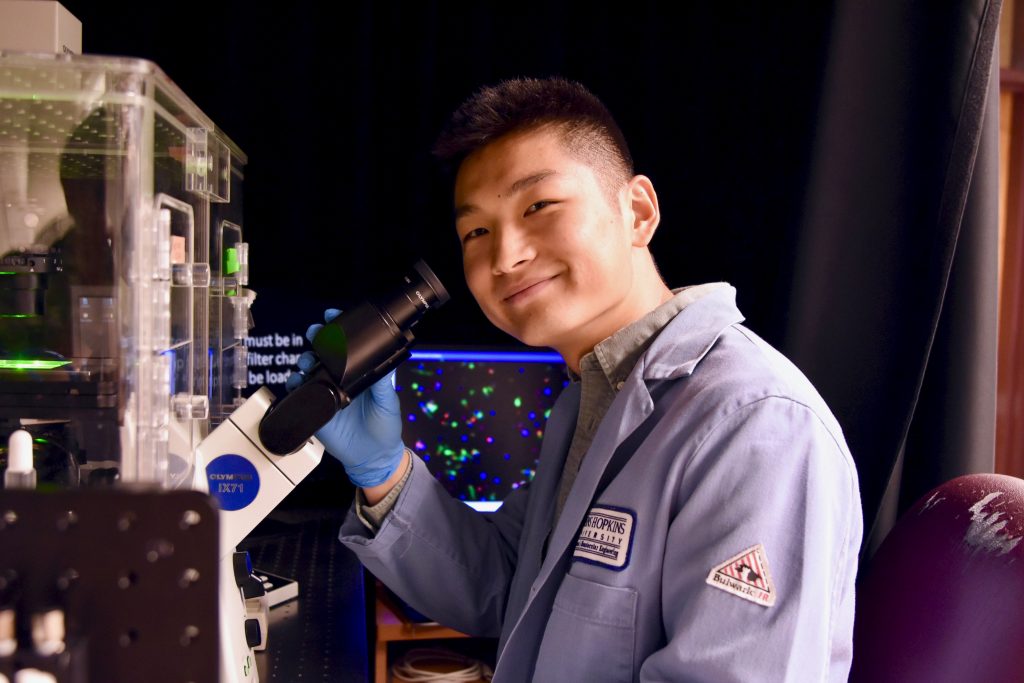
Rebecca Schulman, associate faculty member at the Institute for NanoBioTechnology’s (INBT) and associate professor in the Department of Chemical and Biomolecular Engineering at the Whiting School of Engineering, along with PhD student Yi Li, have developed DNA nanostructures that can self-heal from damage caused by nuclease enzymes in the body. Their results were published in Nano Letters.
DNA nanostructures, which can be assembled into various shapes, have many medical uses such as diagnosing diseases and delivering medications. However, one of the difficulties faced by researchers is the nanostructures are degraded by naturally occurring enzymes in the body and in cell cultures. Current methods to stabilize the structures, such as coating the structures and chemical modification, can be expensive and compromise the compatibility of the structure. Therefore, researchers need to find a way to preserve the structure.
Schulman and Li’s self-repairing method builds nanostructure with smaller DNA “tiles” in a serum. By adding extra “tiles” to the serum, the structures substantially extend their life from 24 hours to 96 hours. A computer model of their self-repairing methods shows that the nanotstructures could be maintained for months or longer. Learn more about the details in the press release by the American Chemical Society.
Latest Posts
-
 Studying Cells to Better Understand Aging
May 29, 2026
Studying Cells to Better Understand Aging
May 29, 2026
-
 Reza Kalhor Receives $250,000 President’s Innovation Award
May 1, 2026
Reza Kalhor Receives $250,000 President’s Innovation Award
May 1, 2026
-
 Alum Receives Schmidt Science Fellowship
April 17, 2026
Alum Receives Schmidt Science Fellowship
April 17, 2026