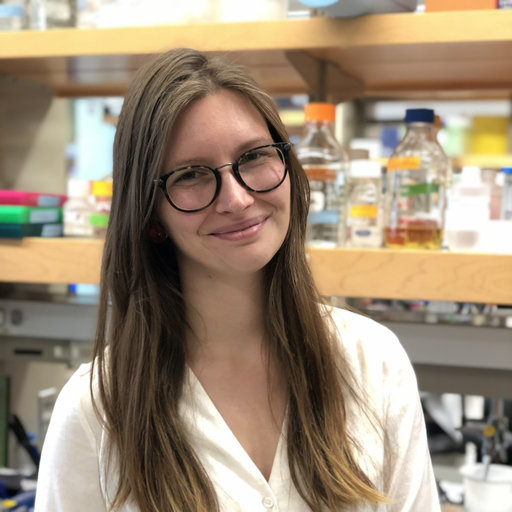
Melanie Weigert, PhD
Senior Research Specialist at INBT (PI: Pisanic)
mweigert1@jhu.edu
0000-0002-8732-1186
Institute for NanoBioTechnology
Shaffer 200E
3400 N Charles St
Baltimore, MD 21218

Dr. Melanie Weigert is a Senior Research Specialist and Project Manager in the Epidiagnostics group at the Institute for NanoBioTechnology at Johns Hopkins University and a member of the Break Through Cancer Foundation Ovarian Cancer TeamLabs. Dr. Weigert has extensively studied Ovarian Cancer for the past 10 years since she started her PhD at the University of Glasgow. She has a broad and background in ovarian cancer biology and a major interest in the treatment of high-grade serous ovarian cancer. She has received advanced training in the application of omics technologies, including NGS technologies such as DNA-, RNA- and Epigenome-Sequencing as well as proteomics and metabolomics. She is versed in the use and application of a wide variety of human specimens with the overall goal of developing minimally invasive blood-based methylation biomarker assays. During her career she has served as PI and Co-PI of several Investigator initiated studies. Her prior research has been funded by the Ovarian Cancer Research Alliance, the Honorable Tina’s Wish Brozman Foundation and the Chan-Zuckerberg Foundation. Her current research interests focus on characterizing DNA methylation and hydroxy-methylation changes during early tumorigenesis with the goal of developing better diagnostic tools for early cancer detection.
Short Bio
Dr. Weigert received her PhD at the University of Glasgow (2017) under the supervision of Professor Iain McNeish, were she studied cell death mechanisms induced by oncolytic adenoviruses in ovarian cancer. She undertook her post-doctoral training at the University of Chicago (2017- 2021) where she explored the analysis of 5hmC and 5mC modifications on cell-free DNA to develop biomarker signatures for ovarian cancer detection. While being a Staff Scientist at the University of Chicago (2021-2025), she further expanded her biomarker discovery efforts using proteomics and metabolomics approaches in addition to studying DNA modifications.