Mini symposium highlights Johns Hopkins student work in cancer nanotechnology

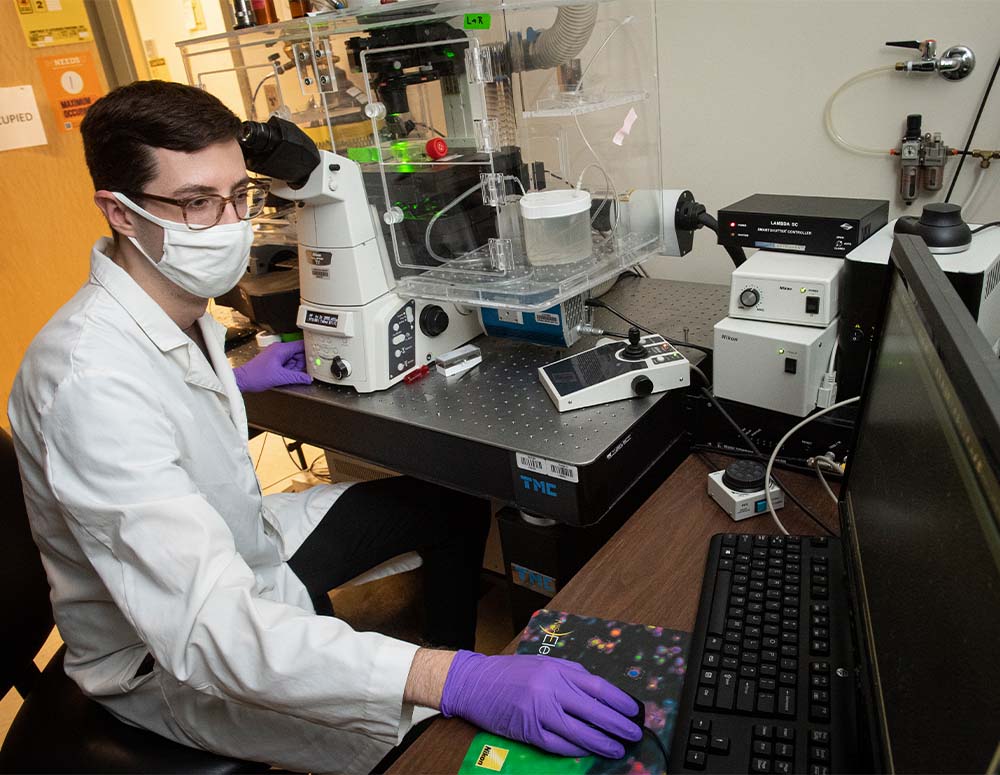
Maureen Wanjara and Laura Dickinson, Johns Hopkins INBT predoctoral students from Sharon Gerecht’s lab (Photo: Marty Katz)

Johns Hopkins Institute for NanoBioTechnology will host a half-day mini-symposium on Wednesday, March 23 to showcase current research from students affiliated with its Engineering in Oncology Center and Center of Cancer Nanotechnology Excellence. Talks begin at 9 a.m. in Hackerman Hall Auditorium (Room B17) and will conclude by noon.

Students speaking include from the Whiting School of Engineering, predoctoral fellows in Chemical and Biomolecular Engineering Stephanie Fraley, Laura Dickinson, and Craig Schneider; and postdoctoral fellows Christopher Hale, Jaeho Park, and Eric Balzer. Speaking from Biomedical Engineering will be predoctoral fellow Yi Zhang and undergradute Kelvin Liu; and in Mechanical Engineering postdoctoral fellow Sam Walcott. Also giving presentations are predoctoral fellow Dipankar Pramanik in Pathology at the Johns Hopkins School of Medicine and John Fini, director of intellectual property for the Homewood campus schools.

Johns Hopkins Engineering in Oncology Center, a Physical Sciences-Oncology Center (PS-OC) funded by a grant from the National Cancer Institute, aims to unravel the physical underpinnings involved in the growth and spread of cancer. Johns Hopkins Center of Cancer Nanotechnology Excellence, also funded by a grant from the NCI, aims to use a multidisciplinary approach to develop nanotechnology-based tools and strategies for comprehensive cancer diagnosis and therapy and to translate those tools to the marketplace.

There is no need to RSVP for the mini-symposium. All Johns Hopkins students, faculty and staff are welcome to attend.

John Hopkins Institute for NanoBioTechnology

Engineering in Oncology Center

Center of Cancer Nanotechnology Excellence

Cancer Nanotechnology theme of INBT’s symposium, May 12-13

The Denis Wirtz lab research centers on investigations of cell micromechanics, cell architecture, nuclear shape and gene expression. Shown are healthy mouse cells with flurorescent staining of the nucleus (blue) and microtubules (green) emanating from the microtubule organizing center (red). (Photo: Wirtz Lab/JHU)

Nanoscale tools developed by engineers have yet to be fully explored and exploited for the diagnosis and treatment of diseases such as cancer. Nanotechnology for Cancer Medicine forms the focus of the fifth annual symposium for Johns Hopkins Institute for NanoBioTechnology (INBT), May 12 and 13, 2011 at the university’s Homewood campus.

Friday, May 13 will feature a symposium with talks from a slate of faculty experts in nanotechnology, oncology, engineering and medicine. Registration begins at 8:30 a.m. in Shriver Hall Auditorium.  A poster session begins at 1:30 p.m. upstairs in the Clipper Room showcasing research from INBT affiliated faculty laboratories across several Johns Hopkins University divisions. Past symposiums have attracted as many as 500 attendees and more than 100 research posters.

Keep checking INBT’s 2011 symposium page for updated information on speakers and more details on how to register and submit a poster title. The symposium and poster session are free for Johns Hopkins affiliated faculty, staff and students.

Keynote Speaker

Stephen B. Baylin is currently Deputy Director, Professor of Oncology and Medicine, Chief of the Cancer Biology Division and Director for Research, of The Sidney Kimmel Comprehensive Cancer Center at Johns Hopkins.For the last 20 years, Stephen Baylin has studied the role of epigenetic gene silencing in the initiation and progression of human cancer. He and his colleagues have fostered the concept that DNA hypermethylation of gene promoters, and associated transcriptional silencing, can serve as an alternative to mutations for producing loss of tumor suppressor gene function. They have described some of the classic genes involved, invented approaches to randomly screen the cancer genome for such genes and to demonstrate their functional role in cancer progression, helped begin unravel the molecular mechanisms responsible for the initiation and maintenance of the gene silencing, and worked to utilize all of their findings for translational purposes.  Baylin has authored or co-authored over 375 full-length publications on the above and other areas of cancer biology.

Stephen Baylin will present the keynote talk at the 2011 Johns Hopkins Nano-Bio Symposium

He has been a member of committees of the American Cancer Society and of National Institutes of Health, and his honors include a Research Career Development Award from NIH, the Edwin Astwood Lectureship of the Endocrine Society, the 2003 Jack Shultz Memorial Lecture in Genetics, Fox Chase  Cancer Center, The 2004 National Investigator of the Year Award from the National Cancer Institute SPORE program, the Jack Gibson Visiting Professorship, University of Hong Kong Queen Mary Hospital, Hong Kong, The 2004 2nd Annual Sydney E. Salmon Lectureship in Translational Research, Arizona Cancer Center, the 2005 Shubitz Cancer Research Prize from the University of Chicago, and he currently holds the Virginia and D.K. Ludwig Chair in Cancer Research at Johns Hopkins. Baylin is also recipient of the 2007 Woodward Visiting Professor, Memorial Sloan-Kettering Cancer Center, the 2008 Raffaele Tecce Memorial Lecture, Trento, Italy, the 2008 The David Workman Memorial Award (jointly with Peter A. Jones, Ph.D.) from the Samuel Waxman Foundation, and the 2009 Kirk A. Landon-AACR Prize for Basic Cancer Research, also shared with Peter A. Jones, the 14th NCI Alfred G. Knudson Award in Cancer Genetics, and, most recently, the Nakahara Memorial Lecture prize at the 2010 Princess Takematsu  Symposium. Currently, he leads, with Peter Jones, the Epigenetic Therapy Stand up to Cancer Team.

Additional confirmed speakers for the 2011 INBT Symposium include:

  • Martin Pomper is a professor at Johns Hopkins School of Medicine with a primary appointment in Radiology and secondary appointments in Oncology, Radiation Oncology, and Pharmacology and Molecular Sciences, as well as Environmental Health Sciences at the Johns Hopkins Bloomberg School of Public Health. Pomper co-directs Johns Hopkins Center of Cancer Nanotechnology Excellence (CCNE).
  • Anirban Maitra is a professor at Johns Hopkins School of Medicine with appointments in Pathology and Oncology at Sol Goldman Pancreatic Research Center and secondary appointments in Chemical and Biomolecular Engineering at the Whiting School of Engineering and the McKusick-Nathans Institute of Genetic Medicine. Maitra co-directs Johns Hopkins Cancer Nanotechnology Training Center and is a project director in the CCNE.
  • Jin Zhang is an associate professor at Solomon H. Snyder Department of Neuroscience at Johns Hopkins School of Medicine with primary appointments in Pharmacology and Molecular Sciences and secondary appointments in Neuroscience, Oncology, and Chemical and Biomolecular Engineering.
  • Hy Levitsky is a professor of Oncology, Medicine and Urology at the Johns Hopkins School of Medicine and the Scientific Director of the George Santos Bone Marrow Transplant Program. Levitsky is a project director at the Center of Cancer Nanotechnology Excellence (CCNE).
  • Gregory Longmore is a professor at the Washington University in St. Louis School of Medicine, Department of Medicine, Oncology Division, Molecular Oncology Section and the Department of Cell Biology and Physiology. Longmore is a project co-director at Johns Hopkins Physical Sciences-Oncology Center (PS-OC).
  • Denis Wirtz is the Theophilus H. Smoot Professor of Chemical and Biomolecular Engineering in the Whiting School of Engineering at Johns Hopkins University. Wirtz is associate director of INBT and director of the Johns Hopkins Physical Sciences-Oncology Center, also known as the Engineering in Oncology Center. He has a secondary appointment in Oncology at the Johns Hopkins School of Medicine.

Workshops

During the afternoon of May 12, INBT will hold four 2-hour hands-on laboratory workshops organized by faculty affiliated with INBT, PS-OC or CCNE. Workshop registration will be limited to 10 persons per session. Sessions will begin at 1 and 3:30 p.m. and will be held in the New Engineering Building. Workshop details, including any costs, are forthcoming.

Become a sponsor

If you or your organization would like to learn how to sponsor INBT’s annual symposium, please contact our director of corporate partnerships, Tom Fekete, at tmfeke@jhu.edu or call him at 410-516-8891. Sponsors enjoy reduced rates on symposium-related events and advertising in our annual Nano-Bio magazine/symposium program, among other benefits.

Media inquiries may be directed to Mary Spiro, science writer and media relations director for INBT, at mspiro@jhu.edu or 410-516-4802.

JHU Applied Physics Lab hosting 2nd Annual Nanomaterials Symposium

The Johns Hopkins Applied Physics Laboratory will host its 2nd Annual Nanomaterials Symposium on Monday, March 14 from 8:30 a.m. to 5 p.m. in the Kossiakoff Conference and Education Center, 11100 Johns Hopkins Road, Laurel, Md. 20723-6099. Come hear stimulating talks and network with speakers, attendees, and
sponsor panelists. Includes a special session for students on postdoctoraal and internship opportunities. Submit a poster for the poster session.

The symposium is FREE for students, but $25 for all others, and lunch is included.

Deadline to register is 5 p.m. March 8. Register online here.

Invited speakers include:

  • Jonah Erlebacher, Johns Hopkins University/INBT
  • Jason Benkoski, JHU Applied Physics Laboratory/INBT
  • Lourdes Salamanca-Riba, University of Maryland College Park
  • Hai-Quan Mao, Johns Hopkins University/INBT
  • Theodosia Gougousi, University of Maryland Balitmore County
  • Gary Rubloff, University of Maryland College Park
  • Brian Holloway, Defense Advanced Research Projects Agency

For additional information:

Johns Hopkins Applied Physics Lab

240-228-9166

NanoBio Magazine premieres at INBT annual symposium

INBT launches new annual magazine.

As attendees arrived at the Johns Hopkins School of Public Health for the Institute for NanoBioTechnology’s (INBT) fourth annual symposium on April 29, they received the first edition of NanoBio Magazine. The new 32-page publication, which served as both the symposium program and as an attractive way to highlight some of INBT’s research in a more comprehensive way, will be published annually.

NanoBio Magazine, produced under the direction of INBT science writer Mary Spiro and INBT web director Martin Rietveld, showcases articles and photography about the institutes’s research, educational, corporate partnership and outreach programs. Articles were written by INBT staff, as well as students from the science communications course taught by Spiro each January during intersession. Photography came  from students who have participated in INBT supported educational programs, INBT staff, and from affiliated faculty members. The graphic design was created by Y.L. Media, LLC. of Baltimore.

“The magazine represents, in a creative and artistic way, the highly interdisciplinary spirit that is a fundamental mission of INBT,” Spiro said. “It was truly a collaborative effort that pulled content from our affiliated faculty and students  in every division and at every academic level that INBT serves. I hope people will learn what INBT is all about by reading it.”

Printed copies of NanoBio Magazine are available upon request by contacting Mary Spiro at mspiro@jhu.edu. Or, download a PDF version of NanoBio Magazine here:  nanobio-magazine_fordownload

Andrew Wong and Noah Tremblay peruse the first issue of NanoBio Magazine. (Photo by Charli Dvoracek/INBT)

Poster presenters needed for symposium on environmental, health impacts of nanotech

2009 INBT Poster Session (Photo: Jon Christofersen)

Poster titles are now being accepted for Johns Hopkins Institute for NanoBioTechnology’s fourth annual symposium, “Environmental and Health Impacts of Engineered Nanomaterials” set for Thursday, April 29, at the Bloomberg School of Public Health. Researchers from across the university, from government and industry, and from other universities are invited to submit posters by the deadline of April 22.

All students, faculty and staff affiliated with any Johns Hopkins campus or school may attend the symposium for free. Students from UMBC and Morgan State University may also attend at no cost.

This year’s symposium brings together faculty experts engaged in various aspects of nanotechnology risk assessment and management research. Jonathan Links, an INBT-affiliated professor in the Department of Environmental Health Sciences at the Bloomberg School, assembled the slate of speakers from across four divisions of the university.

Links said that this diversity reflects the multidisciplinary approach needed to effectively address questions of how nanomaterials move through and interact with the environment, and how they may impact biological organisms, including humans. Links added that despite some concerted efforts to assess risk, many questions remain unanswered about how engineered nanomaterials and nanoparticles impact human health and the environment.

“Without these data, we are flying blind. But when risk assessment is performed in tandem with research into beneficial applications, it helps researchers make better decisions about how nanotechnology is used in the future,” Links said.

Along with Links, professors from the Bloomberg School presenting talks at the symposium include Ellen Silbergeld, of Environmental Health Sciences, and Patrick Breysse, of Environmental Health Engineering and Environmental Health Sciences. William P. Ball, a professor in the Whiting School of Engineering’s Department of Geography and Environmental Engineering; Justin Hanes, a professor in the School of Medicine’s Department of Ophthalmology, with joint appointments in the Whiting School’s Department of Chemical and Biomolecular Engineering and the Bloomberg School’s Department of Environmental Health Sciences; and Howard Fairbrother, a professor in the Krieger School of Arts and Sciences’ Department of Chemistry, will talk about the transport of nanomaterials through environmental and biological systems, as well as the unusual properties of manufactured nanomaterials.

Tomas Guilarte, recently appointed chair of the Department of Environmental Health Sciences at Columbia University’s Mailman School of Public Health and a former professor at the Bloomberg School, will provide a presentation on neurotoxicity of nanoparticles. Ronald White, an associate scientist and deputy director of the Bloomberg School’s Risk Sciences and Public Policy Institute, will discuss policy implications based on risk assessment.

Symposium talks will be from 8:30 a.m. until noon in Sheldon Hall (W1214), and a poster session, with prizes for top presenters, will be held from 1:30 to 3 p.m. in Feinstone Hall (E2030).

To register for the symposium or to display a poster, click here.

For more information about INBT’s fourth annual symposium, click here.

Story by Mary Spiro

Environmental, health impacts of engineered nanomaterials theme of INBT’s annual symposium

By 2015, the National Science Foundation reports that the nanotechnology industry could be worth as much as $1 trillion. Nanomaterials have many beneficial applications for industry, medicine and basic scientific research. However, because nanomaterials are just a few atoms in size, they also may pose potential risks for human health and the environment.

Cross-sectional autoradiograms of rodent brains showing (A) control physiological state; and (B) and (C) showing distribution of brain injury from an injected neurotoxicant. Red areas indicate the highest concentrations of a biomarker that identifies brain areas that are damaged by the neurotoxicant. (Guilarte Lab/JHU)

Cross-sectional autoradiograms of rodent brains showing (A) control physiological state; and (B) and (C) showing distribution of brain injury from an injected neurotoxicant. Red areas indicate the highest concentrations of a biomarker that identifies brain areas that are damaged by the neurotoxicant. (Guilarte Lab/JHU)

To increase awareness of Hopkins’ research in this emerging area of investigation, the theme for the fourth annual symposium hosted by Johns Hopkins Institute for NanoBioTechnology (INBT) will be environmental and health impacts of engineered nanomaterials. INBT’s symposium will be held Thursday, April 29, from 8 a.m. to 3 p.m. at the university’s Bloomberg School of Public Health in Baltimore, Md.

Morning talks in Sheldon Hall by eight Hopkins faculty experts will discuss neurotoxicity, exposure assessment, manufacture and characterization of nanomaterials, policy implications and many other topics. In the afternoon, a poster session will be held in Feinstone Hall featuring nanobiotechnology research from across the university’s divisions.

INBT is seeking corporate sponsorships for the symposium. Interested parties should contact Thomas Fekete, INBT’s director of corporate partnerships at tmfeke@jhu.edu or 410-516-8891.

Media inquiries should be directed to Mary Spiro, INBT’s science writer and media relations director, at mspiro@jhu.edu or 410-516-4802.

A call for posters announcement will be made at a later date.

More: