
Agenda, workshops set for Johns Hopkins cancer nanotech symposium

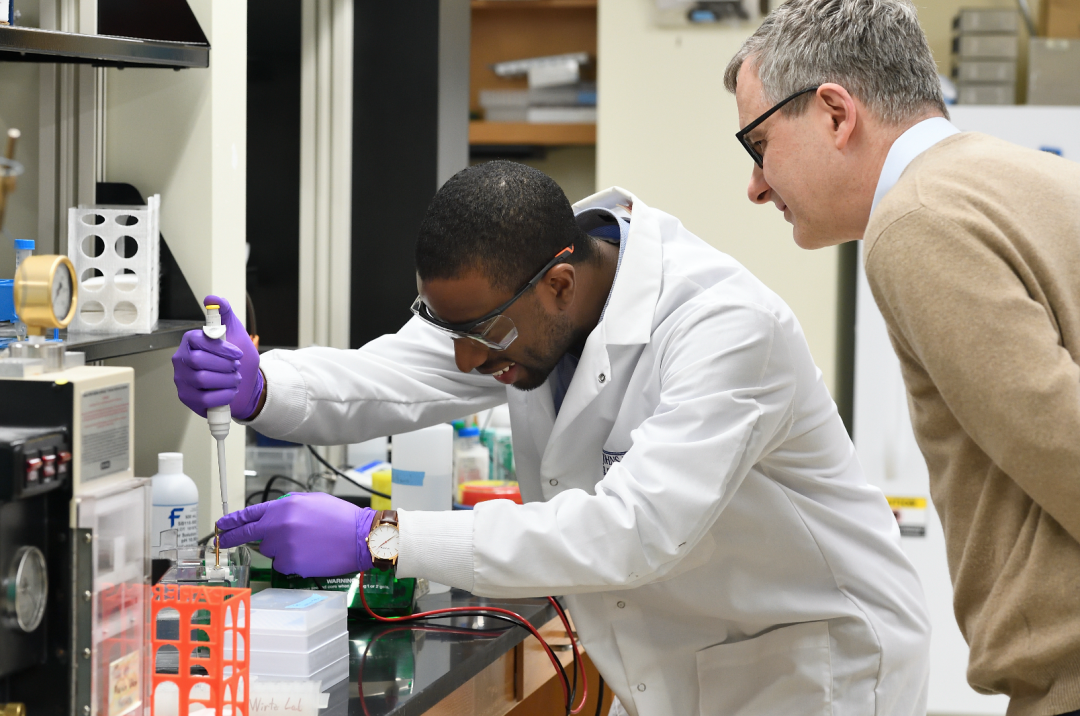
Hands-on workshops are part of this year’s INBT symposium. (Photo: Marty Katz/baltimorephotographer.com)

Cancer Nanotechnology forms  the focus of the fifth annual symposium for Johns Hopkins Institute for NanoBioTechnology (INBT), May 12 and 13, 2011 at the university’s Homewood campus. Friday, May 13 will feature a symposium with talks from a slate of faculty experts in nanotechnology, oncology, engineering and medicine, while hands-on workshops will be offered to small groups on Thursday, May 12.

Registration begins at 8:30 a.m. in Shriver Hall Auditorium. A poster session begins at 1:30 p.m. upstairs in the Clipper Room showcasing research from INBT affiliated faculty laboratories across several Johns Hopkins University divisions. Past symposiums have attracted as many as 500 attendees and more than 100 research posters. To register and to submit a poster, click here.

Agenda

Cancer Nanotechnology: The annual symposium of Johns Hopkins Institute for NanoBioTechnology

May 13, 2011, Shriver Hall

8:30-9:00 am: Registration, Lobby of Shriver Hall

9:00-9:05 am: Welcome/Introduction of Speakers, Denis Wirtz

9:05-9:35 am: “Why develop sensitive detection systems for abnormal DNA methylation in cancer?”

Stephen Baylin is Deputy Director, Professor of Oncology and Medicine, Chief of the Cancer Biology Division and Director for Research of The Sidney Kimmel Comprehensive Cancer Center at Johns Hopkins.

9:35-9:55 am: “Enabling cancer drug delivery using nanoparticles”

Anirban Maitra is a professor at Johns Hopkins School of Medicine with appointments in Pathology and Oncology at the Sol Goldman Pancreatic Research Center and secondary appointments in Chemical and Biomolecular Engineering at the Whiting School of Engineering and the McKusick-Nathans Institute of Genetic Medicine. Maitra co-directs Johns Hopkins Cancer Nanotechnology Training Center and is a project director in the CCNE.

9:55-10:15 am: “Epithelial Morphogenesis in Cancer Metastasis”

Gregory Longmore is a professor at the Washington University in St. Louis School of Medicine, Department of Medicine, Oncology Division, Molecular Oncology Section and the Department of Cell Biology and Physiology. Longmore is a project co-director at Johns Hopkins Physical Sciences-Oncology Center (PS-OC).

10:15-10:35 am: “A Translational Nanoparticle-Based Imaging Method for Cancer”

Martin Pomper is a professor at Johns Hopkins School of Medicine with a primary appointment in Radiology and secondary appointments in Oncology, Radiation Oncology, and Pharmacology and Molecular Sciences, as well as Environmental Health Sciences at the Johns Hopkins Bloomberg School of Public Health. Pomper co-directs Johns Hopkins Center of Cancer Nanotechnology Excellence (CCNE)

10:35-10:50 am: Break

10:50-10:55 am: Welcome/Introduction of Speakers, Anirban Maitra

10:55-11:15 am: “Cancer Cell Motility in 3-D”

Denis Wirtz is the Theophilus H. Smoot Professor of Chemical and Biomolecular Engineering in the Whiting School of Engineering at Johns Hopkins University. Wirtz is associate director of INBT and director of the Johns Hopkins Physical Sciences-Oncology Center, also known as the Engineering in Oncology Center. He has a secondary appointment in Oncology at the Johns Hopkins School of Medicine.

11:15-11:35 am: “MRI as a Tool for Developing Vaccine Adjuvants”

Hy Levitsky is a professor of Oncology, Medicine and Urology at the Johns Hopkins School of Medicine and the Scientific Director of the George Santos Bone Marrow Transplant Program. Levitsky is a project director at the Center of Cancer Nanotechnology Excellence (CCNE).

11:35-11:55 am: “Genetically Encodable FRET-based Biosensors for probing signaling dynamics”

Jin Zhang is an associate professor at Solomon H. Snyder Department of Neuroscience at Johns Hopkins School of Medicine with primary appointments in Pharmacology and Molecular Sciences and secondary appointments in Neuroscience, Oncology, and Chemical and Biomolecular Engineering.

11:55-12:00 pm: Adjourn/Concluding Remarks, Thomas Fekete, director of corporate partnerships, INBT

12:00-1:30 pm: Break

1:30-3:30 pm: Research Poster Session, Clipper Room, Shriver Hall

Workshops give hands-on experience to nano-bio researchers

In conjunction with the fifth annual symposium talks and poster session, Johns Hopkins Institute for NanoBioTechnology will hold hands-on laboratory workshops to introduce some of the methods developed by affiliated faculty. Space is limited to participate in the workshops, which will be held the afternoon of May 12 at INBT’s headquarters in Suite 100 of the New Engineering Building. Times, instructors and topics are listed below. If you are interested in signing up for one or more of the workshops, please contact INBT’s administrative coordinator Tracy Smith at TracyINBT@jhu.edu or call 410-516-5634.

For more information about INBT’s symposium go to: http://inbt.jhu.edu/outreach/symposium/twentyeleven/

Session A: 1-3 pm

1. Electrospinning of polymeric nanofibers for tissue engineering application: Nanofibrous materials are increasingly used in tissue engineering and regenerative medicine applications and for local delivery of therapeutic agents. Electrospinning is the most widely used method for producing nanofiber matrices because of its high versatility and capacity to generate nanofibers from a variety of polymer solutions or melts. It can generate fibers with diameters ranging from tens of nanometers to a few microns. This workshop will review the basic principle of electrospinning, investigate the effect of several key parameters on fiber generation, demonstrate the method to generate nanofiber mesh and nanofiber conduits, and discuss the potential applications for tissue engineering and repair.

Instructors: Russell Martin and Hai-Quan Mao (Mao Lab)

2. Particle tracking microrheology: This hands-on course will teach participants the fundamentals and applications of high-throughput approaches to cytometry, including cell morphometry and microrheology. These approaches are being used for rapid phenotyping of cancer cells.

Instructors: Wei-Chiang Chen, Pei-Hsun Wu, and Denis Wirtz (Wirtz Lab)

Session B: 3:30-5:30 pm

3. Synthesis of quantum dots for bioengineering: This workshop will provide a hands-on approach to the synthesis of CdSe QD cores and how to purify these cores from excess surfactant. A brief discussion how to successfully electrically passivate the cores will follow. Participants will be able to water solubilize core/shell QDs using pegylated lipids. Several methods for characterizing the QDs through the synthesis and water solubilization will be performed.

Instructors: Charli Dvoracek, Justin Galloway, and Jeaho Park (Searson Lab)

4. Microfluidics for studying cell adhesion: This workshop will focus on fabrication of an “artificial blood vessel” via photolithography to generate a micron-sized (cross-section) channel. The micro-channel will be connected to a syringe pump to initiate fluid flow simulating the blood flow inside a blood vessel. This tool can be used to study how cancer cells interact with “blood vessel” surface when coated with adhesion proteins.

Instructors: Tommy Tong and Eric Balzer (K. Konstantopoulos Lab)

Story by Mary Spiro


Sponsors needed for JHU nano-bio symposium

Andrew Wong and Noah Tremblay peruse the first issue of NanoBio Magazine (Photo by Charli Dvoracek/INBT)

Cancer Nanotechnology is the theme of the fifth annual symposium of Johns Hopkins Institute for NanoBioTechnology (INBT), May 12-13, 2011 at the university’s Homewood campus. Sponsors are needed to help offset the cost of publishing Nano-Bio magazine, which serves as the event’s program and to provide prizes for top poster presenters. The poster session will feature at least 80 research posters from INBT affiliated research laboratories.

If you or your organization would like to learn how to sponsor the INBT’s annual symposium, please contact our director of corporate partnerships, Tom Fekete, at tmfeke@jhu.edu or call him at 410-516-8891. Sponsors enjoy reduced rates on symposium-related events and advertising in our annual Nano-Bio magazine/symposium program, among other benefits.

Additionally, INBT also needs sponsors to donate prizes for the poster session. Books, gift cards, science-themed t-shirts and the like all make wonderful prizes for our student researchers. If your organization would like to donate a prize, please contact INBT’s science writer Mary Spiro at mspiro@jhu.edu or 410-516-4802.

For more details on the symposium, including a list of speakers, click here or go to http://inbt.jhu.edu/outreach/symposium/twentyeleven/

To learn more about sponsorship, click here or go to http://inbt.jhu.edu/outreach/symposium/twentyeleven/sponsorship-information/

Mini symposium highlights Johns Hopkins student work in cancer nanotechnology

Maureen Wanjara and Laura Dickinson, Johns Hopkins INBT predoctoral students from Sharon Gerecht’s lab (Photo: Marty Katz)

Johns Hopkins Institute for NanoBioTechnology will host a half-day mini-symposium on Wednesday, March 23 to showcase current research from students affiliated with its Engineering in Oncology Center and Center of Cancer Nanotechnology Excellence. Talks begin at 9 a.m. in Hackerman Hall Auditorium (Room B17) and will conclude by noon.

Students speaking include from the Whiting School of Engineering, predoctoral fellows in Chemical and Biomolecular Engineering Stephanie Fraley, Laura Dickinson, and Craig Schneider; and postdoctoral fellows Christopher Hale, Jaeho Park, and Eric Balzer. Speaking from Biomedical Engineering will be predoctoral fellow Yi Zhang and undergradute Kelvin Liu; and in Mechanical Engineering postdoctoral fellow Sam Walcott. Also giving presentations are predoctoral fellow Dipankar Pramanik in Pathology at the Johns Hopkins School of Medicine and John Fini, director of intellectual property for the Homewood campus schools.

Johns Hopkins Engineering in Oncology Center, a Physical Sciences-Oncology Center (PS-OC) funded by a grant from the National Cancer Institute, aims to unravel the physical underpinnings involved in the growth and spread of cancer. Johns Hopkins Center of Cancer Nanotechnology Excellence, also funded by a grant from the NCI, aims to use a multidisciplinary approach to develop nanotechnology-based tools and strategies for comprehensive cancer diagnosis and therapy and to translate those tools to the marketplace.

There is no need to RSVP for the mini-symposium. All Johns Hopkins students, faculty and staff are welcome to attend.

John Hopkins Institute for NanoBioTechnology

Engineering in Oncology Center

Center of Cancer Nanotechnology Excellence

Platelets, coagulation and cancer metastasis: a sticky situation in the blood

Owen McCarty

Join the Chemical and Biomolecular Engineering department for the first seminar of 2011: “Platelets, Coagulation and Cancer Metastasis: a Sticky Situation in the Blood” at 10:45 a.m., Thursday, March 3 in room 301 of Shaffer Hall at the Homewood campus of Johns Hopkins University. Owen J.T. McCarty of Oregon Health and Science University is the invited speaker.

McCarty serves as an assistant professor at OHSU in Portland in the departments of Biomedical Engineering and Cell and Developmental biology. He studies the interplay between cell biology and fluid mechanics in the cardiovascular system. His investigation into the balance between hydrodynamic shear forces and chemical adhesive interactions could shed light on the underlying processes of cancer, cardiovascular disease, and inflammation.

An alumnus of Johns Hopkins University, McCarty’s 2002 Ph.D. dissertation in Chemical and Biomolecular Engineering focused on the role of platelets in cancer metastasis and thrombosis. At the Department of Pharmacology, Oxford University and Centre for Cardiovascular Sciences, University of Birmingham, UK, he continued his research as a Wellcome Trust Postdoctoral Fellow in the area of thrombosis, examining the signaling pathways that rule platelet cytoskeletal reorganization. McCarty’s talk is co-sponsored by the Johns Hopkins Physical Sciences Oncology Center.

Johns Hopkins Physical Sciences Oncology Center

JHU Applied Physics Lab hosting 2nd Annual Nanomaterials Symposium

The Johns Hopkins Applied Physics Laboratory will host its 2nd Annual Nanomaterials Symposium on Monday, March 14 from 8:30 a.m. to 5 p.m. in the Kossiakoff Conference and Education Center, 11100 Johns Hopkins Road, Laurel, Md. 20723-6099. Come hear stimulating talks and network with speakers, attendees, and
sponsor panelists. Includes a special session for students on postdoctoraal and internship opportunities. Submit a poster for the poster session.

The symposium is FREE for students, but $25 for all others, and lunch is included.

Deadline to register is 5 p.m. March 8. Register online here.

Invited speakers include:

  • Jonah Erlebacher, Johns Hopkins University/INBT
  • Jason Benkoski, JHU Applied Physics Laboratory/INBT
  • Lourdes Salamanca-Riba, University of Maryland College Park
  • Hai-Quan Mao, Johns Hopkins University/INBT
  • Theodosia Gougousi, University of Maryland Balitmore County
  • Gary Rubloff, University of Maryland College Park
  • Brian Holloway, Defense Advanced Research Projects Agency

For additional information:

Johns Hopkins Applied Physics Lab

240-228-9166

Former nanobio summer intern featured in med school newsletter

Obafemi Ifelowo (Photo:MSpiro)

One of Johns Hopkins Institute for NanoBioTechnology’s 2010 summer research interns –Obafemi Ifelowo, a senior molecular biology, biochemistry and bioinformatics major at Towson University– was featured in a recent issue of the Johns Hopkins School of Medicine Science Newsletter. Ifelowo worked in the biomedical engineering laboratory of affiliated faculty member Jordan Green. Read more.

INBT’s summer nanobio internship is a Research Experience for Undergraduates (REU) program funded by the National Science Foundation. The Institute supported 16 students during the summer of 2010 for 10 weeks of research in laboratories across The Johns Hopkins University campuses.  Learn more about INBT’s summer nanobio REU program  here.

INBT’s Nano-Magic appears at first USA Science and Engineering Festival Expo

The first USA Science & Engineering Festival Expo is set for October 23-24 on the National Mall in Washington, D.C., and Johns Hopkins Institute for NanoBioTechnology will be there showcasing some of our research. More than 1,500 interactive exhibits and stage shows are planned.

INBT will present a hands-on exhibit of demonstrations dedicated to self-assembly entitled “Nano-Magic” that will allow visitors of all ages a chance to learn about now atoms, molecules and materials have ways of building structures all by themselves. Graduate students affiliated with INBT training programs will help visitors understand the science. In addition, several of the videos created by INBT’s Animation Studio will be on display on a computer monitor.

Some of the other exhibits include the science behind TRON and other Hollywood movies, baseball, superheroes, Thanksgiving dinner, and NASCAR as well as the mathematics of speed jump roping. There are also 50 stage shows featuring science musicians, comedians, and rock stars. Even the Redskins cheerleaders will be leading a pep rally for science.

Bring the whole family to this free event. Come check out our booth located at Section NM 6, Booth No. 610, along with several other Johns Hopkins affiliated exhibits listed here. Visit the official festival website to view all exhibit and stage shows, download a map of the Expo grounds, and view the entire festival calendar.

Related Link:

INBT Animation Studio

INBT’s international research program sends second team of students to Belgium

Johns Hopkins Institute for NanoBioTechnology supports university students to conduct research in an international setting. Their work, travel and housing expenses are funded through INBT with a National Science Foundation’s International Research Experience for Students (IRES) program and through a partnership with The Inter-University MircroElectronics Centre (IMEC) in Leuven, Belgium.

This summer, two Whiting School of Engineering students, Mike Keung, a master’s student in Chemical and Biomolecular Engineering, and Kayla Culver, a recent bachelor’s graduate in Materials Science and Engineering, spent the summer conducting research at IMEC. Additional Johns Hopkins students will be traveling to Belgium later in the year.

“Students work at IMEC’s world-class microfabrication facility and learn to design, fabricate and test chip-based platforms and integrated microelectronic systems for biomedical applications,” said INBT director Peter Searson, the Joseph R. and Lynn C. Reynolds Professor of Materials Science and Engineering. “The goal of the program is to help students gain a broader, global perspective of science and technology.”

IMEC performs world-leading research in nano-electronics and nano-technology with a staff of more than 1,750 people, including 550 industrial residents and guest researchers. The research is applied to healthcare, electronics, sustainable energy, and transportation.

Keung and Culver maintained blogs about their experiences in Europe and at IMEC. Keung, who also worked at IMEC last year through the IRES program, has written his blog for two years in a row. The blogs, reflect both the rich educational and cultural experience that the IRES program is intended to provide for participants. For example, both students conducted experiments that will enhance their careers and skill sets, as well as support the research goals of their mentors both at Johns Hopkins and at IMEC. But Keung and Culver also had the opportunity to be immersed in a different culture, travel to nearby cities and countries, and practice collaborating with scientists from around the world.

For more information about INBT IRES program click here.

Clikc on the images below to check out Mike’s and Kayla’s blogs!


Mike Keung’s IMEC Blog

Kayla Culver’s IMEC Blog

Story by Mary Spiro

Collaborative poster session for INBT’s REU students set for Aug. 5

Doug Robinson and John Molina discuss summer research. (Photo by Mary Spiro)

Johns Hopkins Institute for NanoBioTechnology hosted 16 undergraduates to conduct research in INBT affiliated laboratories this summer. On Thursday, Aug. 5, from 3-4:30 p.m. those students, plus many others who participated in short-term research projects across all JHU campuses this summer, will present their findings at a collaborative poster session in Turner Concourse at the School of Medicine. All faculty, staff, and students are invited to stop by for this informative and free event. For more information about INBT’s summer research experience for undergraduates, a National Science Foundation supported program, click here.

Nanowires Deliver Biochemical Payloads to One Cell Among Many

Imagine being able to drop a toothpick on the head of one particular person standing among 100,000 people in a sports stadium. It sounds impossible, yet this degree of precision at the cellular level has been demonstrated by researchers affiliated with The Johns Hopkins University Institute for NanoBioTechnology. Their study was published online in June in Nature Nanotechnology.

Arrow points to nanowire placed on cell surface. (Image: Levchenko/Chien labs)

The team used precise electrical fields as “tweezers” to guide and place gold nanowires, each about one-two hundredth the size of a cell, on predetermined spots, each on a single cell. Molecules coating the surfaces of the nanowires then triggered a biochemical cascade of actions only in the cell where the wire touched, without affecting other cells nearby. The researchers say this technique could lead to better ways of studying individual cells or even cell parts, and eventually could produce novel methods of delivering medication.

Indeed, the techniques not relying on this new nanowire-based technology either are not very precise, leading to stimulation of multiple cells, or require complex biochemical alterations of the cells. With the new technique the researchers can, for instance, target cells that have cancer properties (higher cell division rate or abnormal morphology), while sparing their healthy neighbors.

“One of the biggest challenges in cell biology is the ability to manipulate the cell environment in as precise a way as possible,” said principal investigator Andre Levchenko, an associate professor of biomedical engineering in Johns Hopkins’ Whiting School of Engineering. In previous studies, Levchenko has used lab-on-a-chip or microfluidic devices to manipulate cell behavior. But, he said, lab-on-a-chip methods are not as precise as researchers would like them to be. “In microfluidic chips, if you alter the cell environment, it affects all the cells at the same time,” he said.

Such is not the case with the gold nanowires, which are metallic cylinders a few hundred nanometers or smaller in diameter. Just as the unsuspecting sports spectator would feel only a light touch from a toothpick being dropped on the head, the cell reacts only to the molecules released from the nanowire in one very precise place where the wire touches the cell’s surface.

With contributions from Chia-Ling Chien, a professor of physics and astronomy in the Krieger School of Arts and Sciences, and Robert Cammarata, a professor of materials science and engineering in the Whiting School, the team developed nanowires coated with a molecule called tumor necrosis factor-alpha (TNF?), a substance released by pathogen-gobbling macrophages, commonly called white blood cells. Under certain cellular conditions, the presence of TNF? triggers cells to switch on genes that help fight infection, but TNF? also is capable of blocking tumor growth and halting viral replication.

Exposure to too much TNF?, however, causes an organism to go into a potentially lethal state called septic shock, Levchenko said. Fortunately, TNF? stays put once it is released from the wire to the cell surface, and because the effect of TNF? is localized, the tiny bit delivered by the wire is enough to trigger the desired cellular response. Much the same thing happens when TNF? is excreted by a white blood cell.

Additionally, the coating of TNF? gives the nanowire a negative charge, making the wire easier to maneuver via the two perpendicular electrical fields of the “tweezer” device, a technique developed by Donglei Fan as part of her Johns Hopkins doctoral research in materials science and engineering. “The electric tweezers were initially developed to assemble, transport and rotate nanowires in solution,” Cammarata said. “Donglei then showed how to use the tweezers to produce patterned nanowire arrays as well as construct nanomotors and nano-oscillators. This new work with Dr. Levchenko’s group demonstrates just how extremely versatile a technique it is.”

To test the system, the team cultured cervical cancer cells in a dish. Then, using electrical fields perpendicular to one another, they were able to zap the nanowires into a pre-set spot and plop them down in a precise location. “In this way, we can predetermine the path that the wires will travel and deliver a molecular payload to a single cell among many, and even to a specific part of the cell,” Levchenko said.

During the course of this study, the team also established that the desired effect generated by the nanowire-delivered TNF? was similar to that experienced by a cell in a living organism.

The team members envision many possibilities for this method of subcellular molecule delivery. “For example, there are many other ways to trigger the release of the molecule from the wires: photo release, chemical release, temperature release. Furthermore, one could attach many molecules to the nanowires at the same time,” Levchenko said. He added that the nanowires can be made much smaller, but said that for this study the wires were made large enough to see with optical microscopy.

Ultimately, Levchenko sees the nanowires becoming a useful tool for basic research. “With these wires, we are trying to mimic the way that cells talk to each other,” he said. “They could be a wonderful tool that could be used in fundamental or applied research.” Drug delivery applications could be much further off. However, Levchenko said, “If the wires retain their negative charge, electrical fields could be used to manipulate and maneuver their position in the living tissue.”

The lead authors for this Nature Nanotechnology article were Fan, a former postdoctoral fellow in the departments of materials science and engineering and in physics and astronomy; and Zhizhong Yin, a former postdoctoral fellow in the Department of Biomedical Engineering. The co-authors included Raymond Cheong, a doctoral student in the Department of Biomedical Engineering; and Frank Q. Zhu, a former doctoral student in the Department of Physics and Astronomy.

Regarding the faculty members’ participation, Chien led the group that developed the electric tweezers technique and collaborated with Levchenko on its biological applications.

The research was funded by the National Science Foundation and the National Institutes of Health.

Johns Hopkins Institute for NanoBioTechnology