About
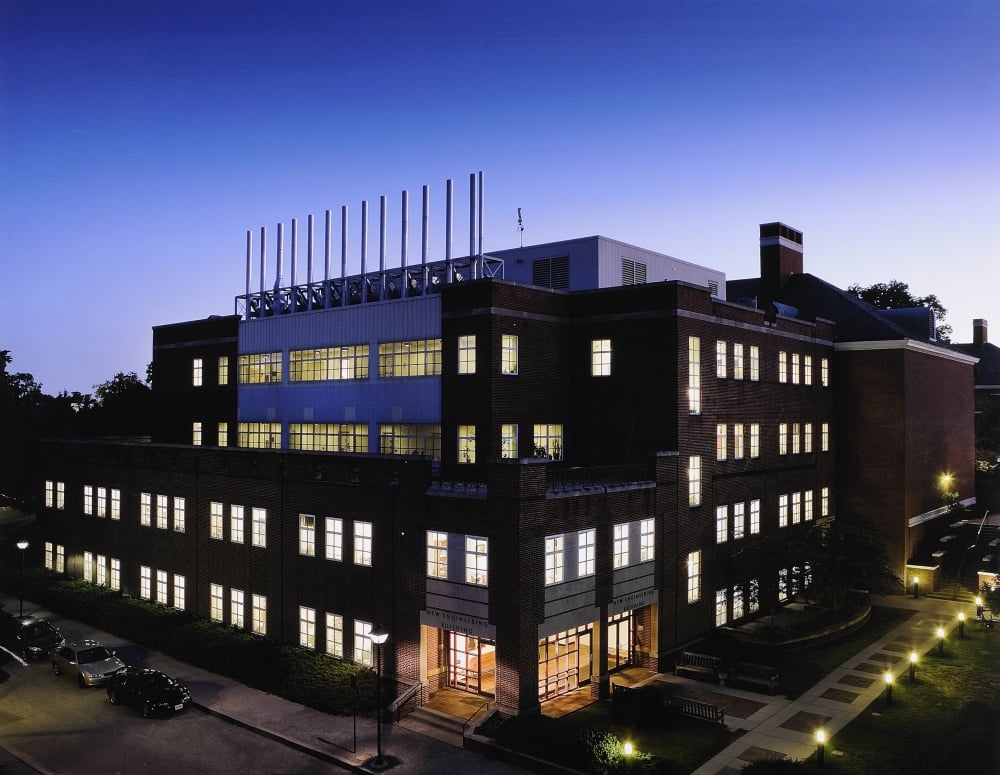
The Johns Hopkins Institute for NanoBioTechnology (INBT) at Johns Hopkins University brings together researchers from: Bloomberg School of Public Health, Krieger School of Arts and Sciences, School of Medicine, Applied Physics Laboratory and Whiting School of Engineering to create new knowledge and new technologies at the interface of nanoscience and medicine.
Research
Launched in 2006, INBT focuses its efforts in research on the basic biological sciences, the clinical sciences, and public health.
- In the basic biological sciences, INBT supports research exploiting nanoscience to advance our understanding of cellular and molecular dynamics at the molecular level.
- In the clinical sciences, INBT supports research to develop novel methods for diagnostics and therapeutics.
- In public health, INBT supports research to understand the potential impact of nanoscience and nanotechnology on health and the environment, as well as on using nanoscience to solve environmental problems.
INBT supports research through a pilot program and grant submission service. Since its creation, INBT has attracted more than $25 million in interdisciplinary research funding.
Education
INBT has created a unique model for training researchers at the interface between nanoscience and medicine, involving lecture courses, laboratory courses, professional development seminars, peer-to-peer teaching, and communications workshops. All students are co-advised by faculty from both the physical sciences/engineering and the biological sciences/medicine.
- INBT is home to two graduate (pre-doctoral) training programs and one postdoctoral training program in nanobiotechnology.
- INBT also maintains the nanobio laboratory, with facilities for both teaching and research.
- A summer research experience for undergraduates (REU) program and an international research experience for students (IRES) program are also offered.
- INBT’s staff offer courses and workshops in science animations and science communication.
Outreach
- INBT organizes an annual nanobio symposium, typically drawing more than 400 attendees from both the University and industry and featuring more than 100 posters on nanobiotechnology research.
- INBT maintains a comprehensive web site with searchable databases for faculty research, a tool repository, nanobio-related courses, and funding opportunities.
- News of INBT activities and articles about the published research of affiliated faculty are reported to the University community and to the news media via its newsletter, NanoBio News, through press releases, and publication on the INBT Web site.
Partnership
The Institute’s Corporate Partnership program provides an interface with industry through the development of summer internships and other opportunities for student-industry research collaborations. INBT currently has five Corporate Partners who play a critical role in carrying out INBT’s mission of multidisciplinary research, education and technology transfer.